
About Hanfu
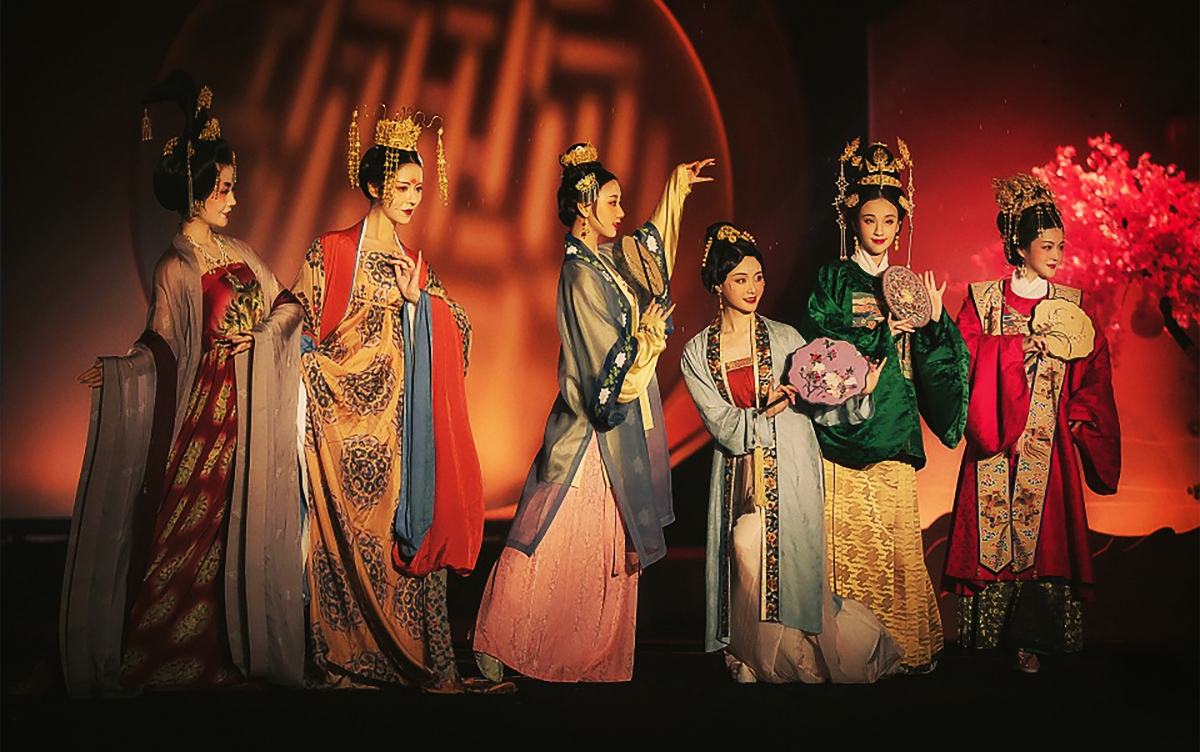
The sage once said, "One dynasty's culture, one dynasty's clothing", ancient Chinese clothing has always changed with the replacement of dynasties, which reflects the wisdom of people in different eras. The clothing of each dynasty is also conducive to our comprehensive understanding of history. Don't forget the original intention and pursue the origin. Today we will talk about the Hanfu in traditional Chinese clothing, which presents the colorful cultural features of different dynasties in ancient China.
Origin of Hanfu
Hanfu, that is, Chinese clothing, also known as Hanzhuang, Huafu, is the traditional national costume of the Han nationality, which has been inherited for five thousand years and has a long history. According to legend, Hanfu originated in the era of the Yellow Emperor, with the emergence of primitive agriculture and textile industry. He began to use linen to make clothes, and later invented sericulture and silk spinning. People's clothing and clothing became more and more perfect. With the appearance of the crown in the Yellow Emperor era, the clothing system gradually formed. .
The following records are the evolution of Hanfu from the Qin and Han Dynasties to the late Ming Dynasty.
The ancient Chinese times
The view of traditional Chinese ancient books generally holds that Chinese clothes were made by the Yellow Emperor about 5,000 years ago or during the Yellow Emperor period. It is said that Leizu, the wife of the Yellow Emperor, raised silkworms and made silk to make clothes.
Archaeological discoveries have confirmed that bone needles and spinning wheels were found in the Peiligang cultural site seven or eight thousand years ago and the Baijia Village site in Lintong, Shaanxi Province, indicating that people were already able to spin cloth and make clothes at that time. In the Yangshao Culture period about 5,000 years ago, not only a large number of spinning wheels were found, but also a large number of imprints of cloth patterns were found on pottery. At the same time, ramie and silkworm cocoons were also found in the ruins, indicating that primitive agriculture and textile industry had emerged at this time. Clothes were made of linen woven from ramie and silk obtained by feeding silkworms, and people's clothing and clothing were becoming more and more complete. Only the actual clothing of this period has not yet been found in archaeological excavations.
Xia, Shang and Western Zhou Dynasties
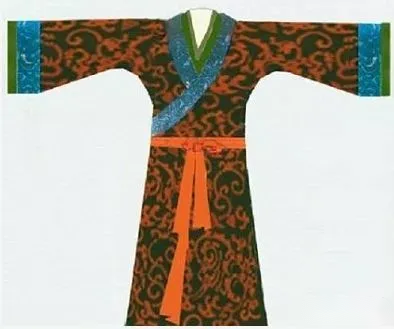
The clothing of this period inherited the characteristics of ancient times, and there are sufficient physical objects to prove that the basic characteristics of Hanfu have been determined at this time: the cross-collar, the right hem, and the tie are the most basic typical features, and the top and bottom are the most basic features. Basic specifications. Among the various glyphs of oracle bone inscriptions and bronze inscriptions, a very common glyph, the word "Yi", is the image of a top with a right collar. The jade man unearthed from Yin Ruins in Anyang, Henan also wears this kind of clothing. The jade man is the earliest and most complete costume model unearthed in China. The bottoms that match the tops with the crossed collar, the right hem, and the tie are "Shang". The upper and lower garments are the most basic styles of Hanfu, and the word "clothes" is still used in Chinese as a general term for clothing.
Qin and Han Dynasties
The clothing of Qin and Han Dynasties basically followed the Warring States period, still mainly dark clothes, which are roughly divided into two types: Qu Ju and Zhi Ju, which can be worn by both men and women.
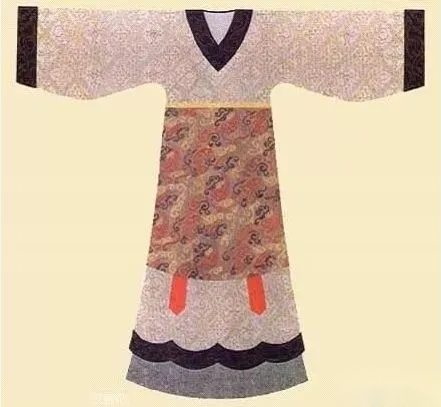
In the Qin and Han Dynasties, Quju Shenyi was the most common type of women's clothing. If you wear several pieces of clothing, the collar of each layer must be exposed, and the maximum number is more than three layers, which is called "triple clothing". Due to the improvement of underwear in the Han Dynasty, the deep clothes with curved skirts around the front were superfluous, so after the Eastern Han Dynasty, the straight skirts gradually became popular. Due to the popularity of deep clothing, the number of women wearing ru skirts has decreased, but it has not disappeared. There are many descriptions in Han Yuefu poems. In the style of Ru skirts in this period, the upper Ru skirts were generally very short, reaching only to the waist, while the skirts were very long and drooped to the ground. In 1957, the real Ru skirt was found in the Mozuizi Han Tomb in Wuwei, Gansu Province.
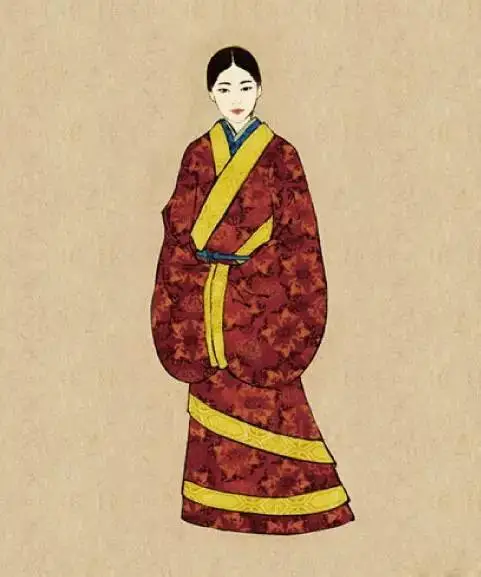
During the Han Dynasty, China's culture, economy, politics, military and other aspects were unprecedentedly prosperous and powerful, hence the name of the Han people. The clothing etiquette system in this period was also extremely complete, and as a result, an idiom "Han official majesty" appeared to praise the clothing system of the Han Dynasty. The name "Hanfu" also indirectly comes from this.
Wei, Jin, Southern and Northern Dynasties
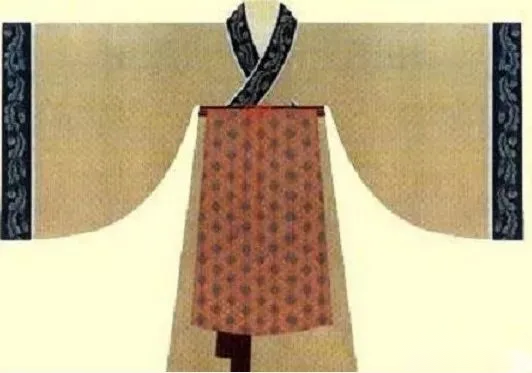
During the Wei, Jin, Southern, and Northern Dynasties, clothing was left behind from the Han Dynasty, but the style of Hanfu became chic and elegant due to the prevailing atmosphere at that time. Most of the celebrities in the Wei and Jin Dynasties wore large coats, or strange underwear similar to today's halter tops, and did not wear middle clothes.
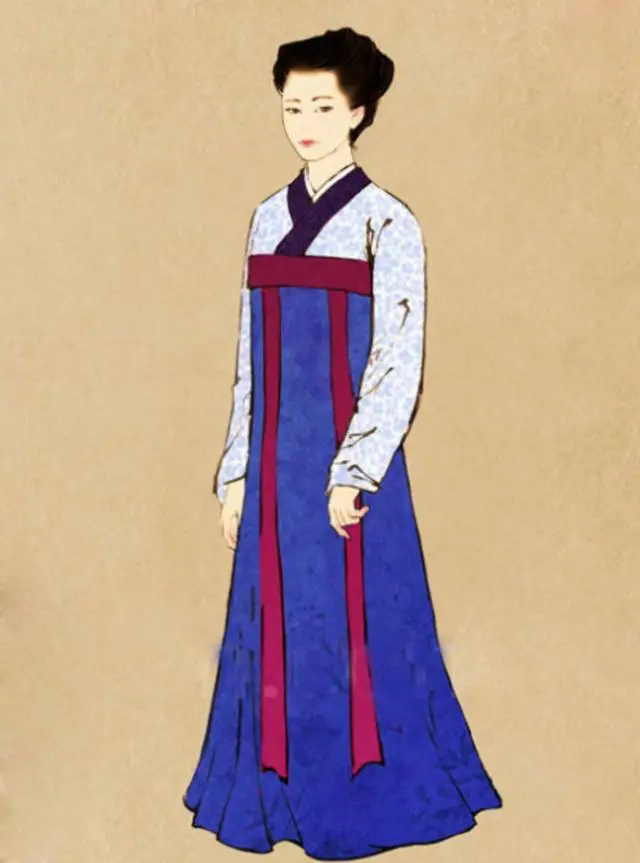
Or influenced by the northern nomads, men in the Central Plains also began to popularize tops and trousers in this era. Qian and trousers are called each other. Due to the hot and humid climate in the south, high-tooth clogs became popular. The robe (miscellaneous robe) is a formal dress among women's clothing in the Wei and Jin Dynasties. During the Wei and Jin Dynasties, the clothing was inherited from the Eastern Han Dynasty, and the style of the Eastern Han Dynasty pursued prosperity and luxury. The jacket is a style with sharp corners on both sides of the garment. During the Wei and Jin Dynasties, people used the sharp corners at home and put a pendant on the side of the skirt. The clothing looks elegant, which is the "Hua Gao Fei" in the poems at that time.
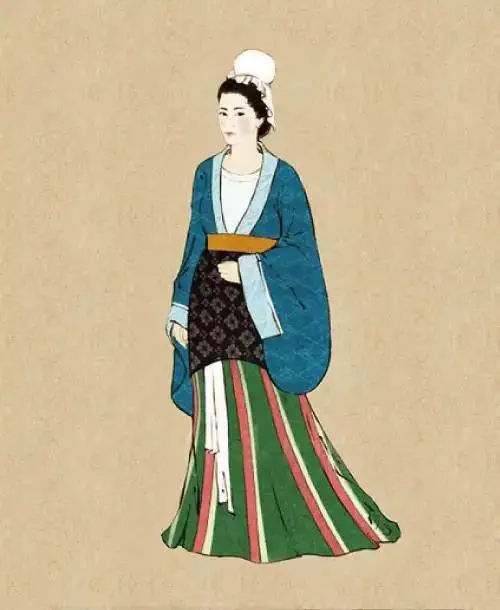
Wei and Jin 220-420 AD
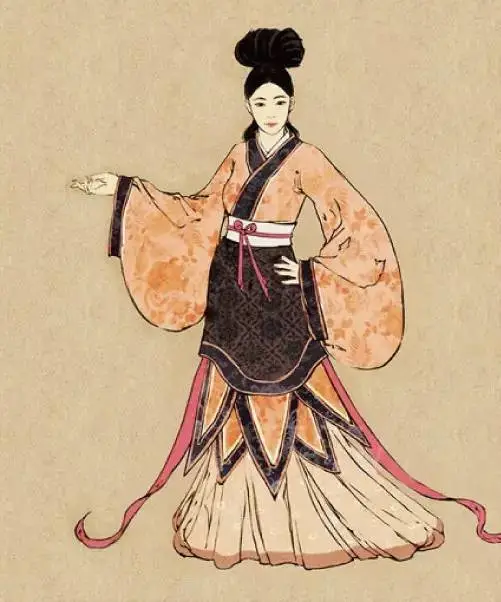
Northern and Southern Dynasties 420-589 AD
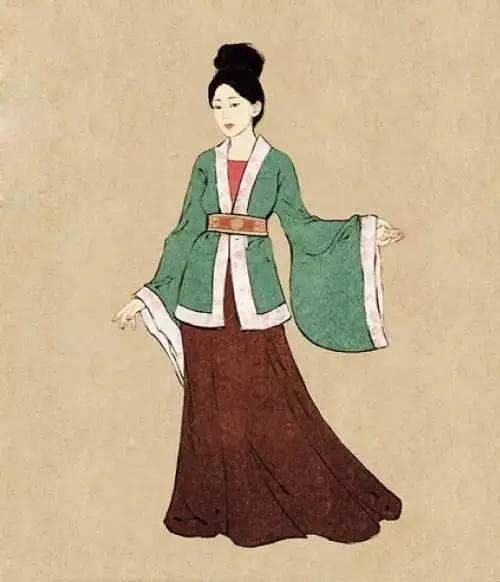
Sui, Tang, and Five Dynasties
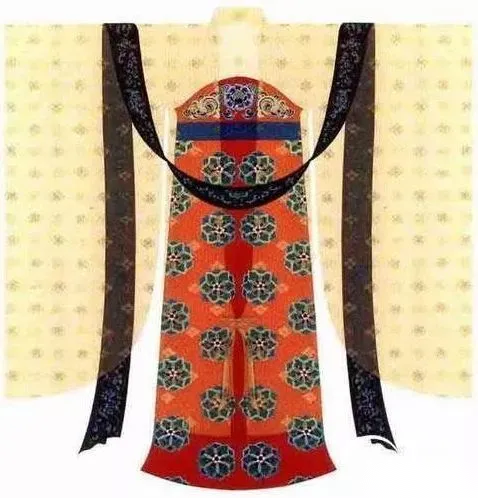
Hanfu in the Sui and Tang Dynasties began to develop high-end innovation, but it did not deviate from the basic characteristics of Hanfu. The main clothing style of women in Sui and Tang Dynasties is still Ru skirt, which is the unity of skirt, shirt, and robe. Among women, the chest-length skirt is very popular, that is, the skirt that lifts the bottom skirt to the chest, and is matched with a silk. Among the noble ladies, they also wore tuan-chai ceremonial clothes. Floral patterns are commonly used in Hanfu craftsmanship, with lively and free compositions, well-proportioned, plump and round, and bold colors. At this time, the design of clothing patterns tends to express the artistic style of freedom, plumpness, and fatness.
Men's clothing in the Tang Dynasty was dominated by robes with futou, also known as futou. In addition to wearing round-necked and narrow-sleeved robes, officials still wear formal attire on some important occasions, such as for sacrificial ceremonies. The style of the dress is mostly inherited from the old system of the previous dynasties, wearing a tie or a crown on the head, wearing a large-sleeved shirt with a pair of fronts, a skirt, a jade pendant, etc. The costumes of the Five Dynasties period basically followed the costumes of the Tang Dynasty without much change.
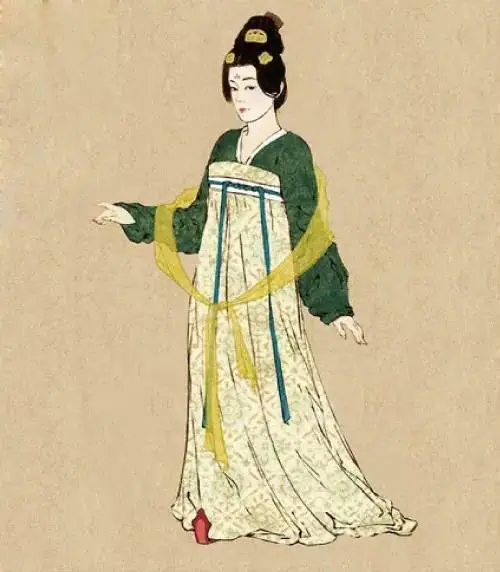
Middle and early Tang Dynasty
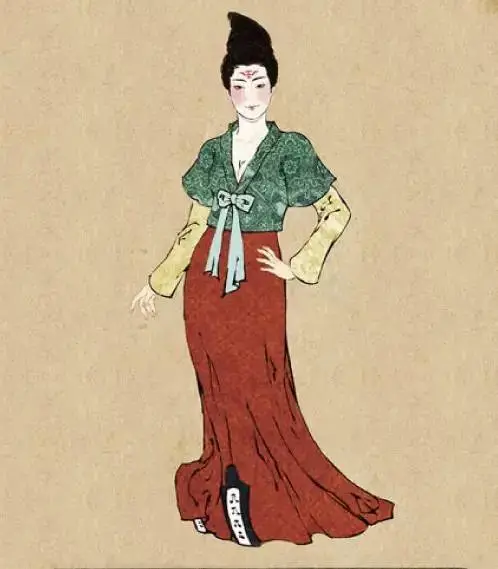
Tang Dynasty 618-907 AD
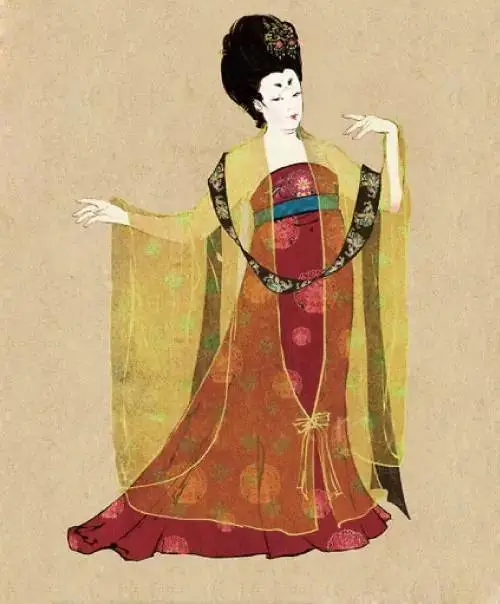
Middle and late Tang Dynasty
Song Dynasty
Due to the political atmosphere in the early Song Dynasty, Hanfu is no longer gorgeous and luxurious, but simple and simple. The men's clothing of the Han nationality in the Song Dynasty followed the two traditional clothing styles of the big lapel and the right cross collar and the round neck. On the basis of following the basic system of the previous generation, Han women's clothing in the Song Dynasty is more varied than men's clothing. Beizi in Song Dynasty had long sleeves and a long bodies, and the crotch was open under the armpit, that is, the front and front of the clothes were not sewn, but the style of the armpit and the back was embellished with straps. In the middle and late Song Dynasty, the country was prosperous, and people's clothing began to be luxurious, and most of them wore silk.
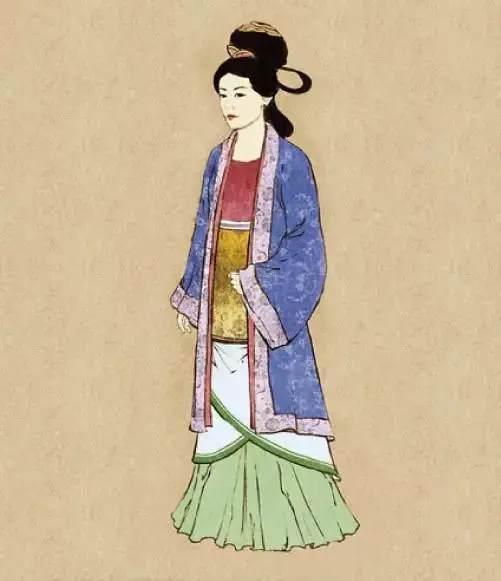
Yuan Dynasty
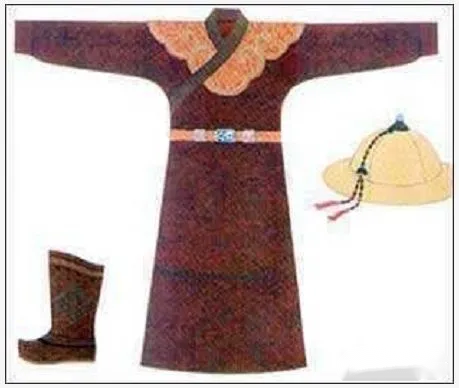
Although the Yuan Dynasty was established by the Mongolians, the Mongolians did not implement the policy of shaving hair and changing clothes similar to the Manchu Qing Dynasty, so the folks still mainly used Han clothing. Yuan Dynasty court officials and scholars usually wore narrow-sleeved robes, and Mongolian women also wore robes. And Han women still wear Hanfu, among which Ru skirt is more popular. It's just that Mongolian clothing and Hanfu are more or less influenced by each other in terms of style.
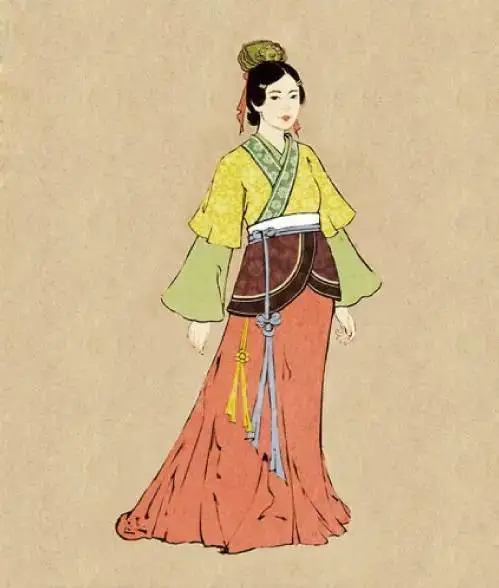
Yuan Dynasty 1271-1368 AD
Ming Dynasty
After the Ming Taizu Zhu Yuanzhang overthrew the Yuan Dynasty, he ordered the world "the clothing system should be as old as the Tang and Song Dynasties", so the Ming Dynasty clothing style restored the Hanfu tradition. Men's clothing basically follows the two traditional clothing styles of the big lapel and the right cross collar and the round neck. But it also absorbed some characteristics of Yuan Dynasty costumes and developed special costumes such as dragging. In the Ming Dynasty, women's clothing was still dominated by Ru skirts. It should be noted that women's jackets and blouses made in the Ming Dynasty are more distinctive and popular. The outerwear is mostly Pipa sleeves with cuffs, and the cuffs can have a collar and guard collar. In addition to the popular shirts, jackets and skirts, new styles such as Xia Pi, Bei Zi, and Bijia are also popular. The variety of clothes and the style and workmanship have reached a peak.
In the men's clothing of the Ming Dynasty, adults wore a wide straight body and a square flat shawl on their head, while ordinary civilians wore short clothes and a turban. At this time, a small cap with six or eight flaps of cloth stitched appeared, which looked a lot like a watermelon cut in half. It was originally worn by servants, but it became popular because it was convenient to wear. This is the predecessor of the "guapi cap" in the Qing Dynasty. Metal buckles and buttons also became popular in the Ming Dynasty, but laces still existed.
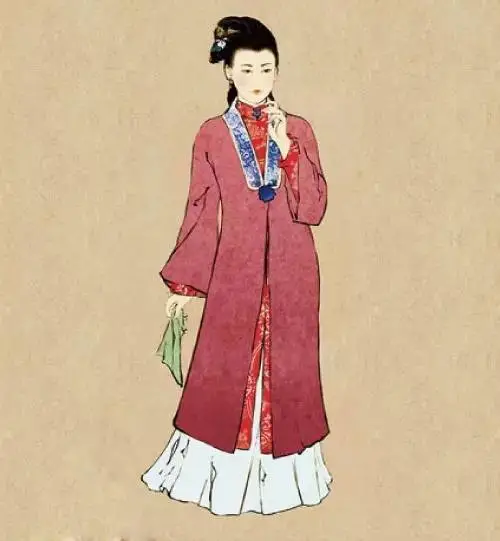
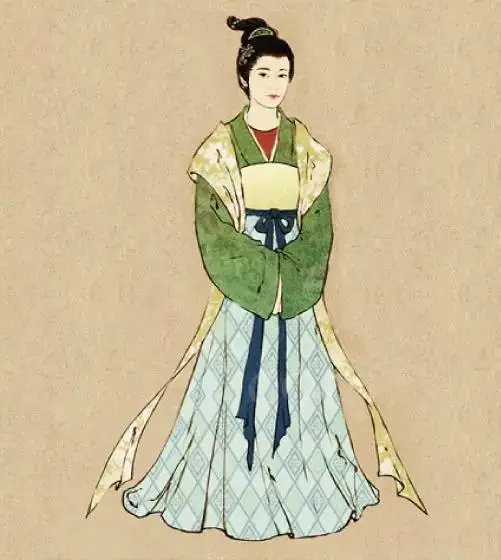
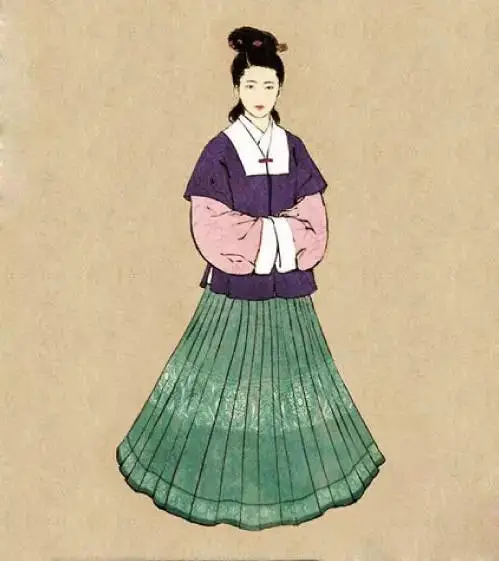
By the Ming Dynasty, the costumes of the Han nationality had profoundly affected neighboring countries (below: the costumes of Korea, Japan, Vietnam and other countries in the same period from the 15th to the 16th century)
As an important carrier of traditional culture, after thousands of years of development, Hanfu has formed a cultural system of clothing that is inclusive, colorful and unique with oriental charm. It has gradually become the cultural symbol of the Han people. The carrier of national spirit, Chinese culture and Chinese history.
Hanfu belongs to both China and the world; it comes from the past and faces the future...
Tips for buying children's shoes online
Happy Chinese New Year Spring Festival
Related Article


