2026 Sneaker Trends: What Wholesale Buyers Should Prepare For

If you’ve been sourcing sneakers for a few years, you’ve probably noticed something:
Planning for 2026 feels harder than it used to.
Not because there are more trends — but because trends don’t last the way they did before.
From ADORGLOBAL’s side, we see buyers spending more time adjusting plans mid-season than setting long-term forecasts. That shift says a lot about where the sneaker market is heading.
Sneakers Are Expected to Do More Than One Job
One clear change we see going into 2026 is this:
Buyers are no longer looking for sneakers that fit only one scenario.
Customers want shoes they can wear to work, while traveling, and during everyday activities. That doesn’t mean the sneaker needs to look “special.” In fact, overly sporty or overly fashion-forward designs often sell worse than expected.
In real orders, the styles that reorder more smoothly are usually the ones that feel neutral but comfortable. They don’t try too hard, and they don’t limit how or when the customer can wear them.
This is why many buyers quietly move away from extreme designs, even if those designs look great on trend boards.
Comfort Is No Longer a Selling Point — It’s a Baseline
Ten years ago, comfort was something brands highlighted in marketing.
Now, it’s something customers assume is already there.
What changes in 2026 is not that comfort suddenly matters more — it’s that complaints travel faster. Online reviews, returns, and customer feedback show up immediately.
From production experience, most comfort complaints don’t come from obvious defects. They come from long wear: shoes that feel fine at first, but uncomfortable after hours of use.
This is why more buyers are paying attention to structure, not just materials. Insoles help, but they don’t fix a poorly balanced shoe.
Trend Colors Are Becoming More Conservative — for a Reason
Buyers still ask about trend colors for 2026, but the way they use them has changed.
Instead of building entire collections around bold colors, many brands now use safer base tones and add color through small details. This gives them flexibility if reorders are needed.
From a factory point of view, this approach also reduces risk. Color consistency is easier to maintain, and production runs stay more stable.
What we see selling better long-term are colorways that don’t lock the product into one season.
Sustainability: Buyers Ask Different Questions Now
Sustainability hasn’t disappeared, but the questions have changed.
Most buyers no longer ask, “Is this eco-friendly?”
They ask, “Will this hold up?” and “How much does it change the cost?”
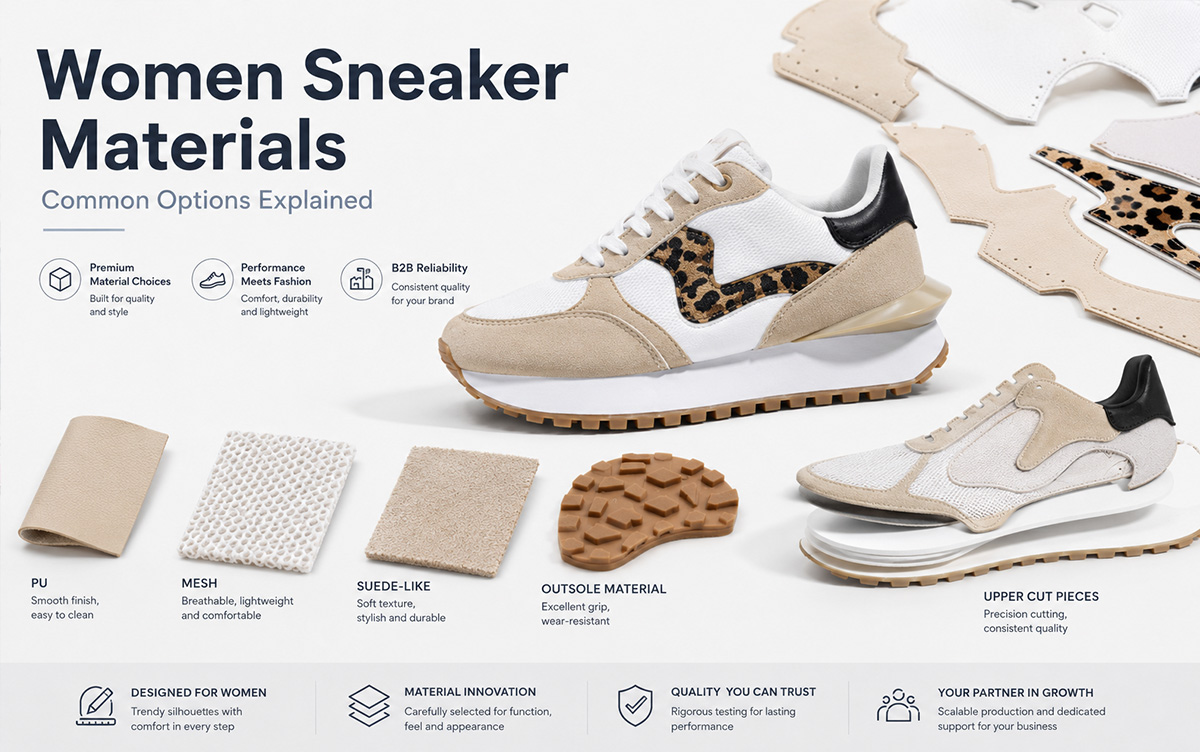
From real orders, sustainability only works when it fits production reality. Materials that sound good but can’t scale usually create more problems than value.
In practice, buyers who choose small, realistic improvements see better results than those trying to redesign everything at once.
Why 2026 Is a Key Year for Custom & Private Label Sneakers
From Made in China to Designed for the World: How Chinese Brands Are Winning the Shoe Game
Related Article